
“Please remember that past performance may not be indicative of future results.”
How many times have you seen and heard that? Here it is again. I bring this to your consciousness once more while I urge you to look at your calendar.
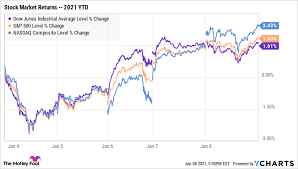
Graphs of stock market performance are plentiful and available right now on your phone/tablet/screen of choice. Never mind what happened yesterday, what has happened so far this year, indeed this decade?
Let’s bring in some greater minds than mine – yes there are some:
“In the business world, the rear-view mirror is always clearer than the windshield’ (Warren Buffett)
I will confess my windshield is pretty dirty, and in the business forecasting sense there is no screen wash either. Yet we will have our views about which way things are going and make our judgments. But I look in the rear-view mirror occasionally too.
My rearward glance this week took me to Wikipedia – see below – and this charts the dates of stock market crashes. (Yes, I know – Wikipedia. Just a useful starting point if not the last word in reliability) Some of the more recent dates I can remember – I was there, well close by…
Quick reminder – look at your calendar. What is it today?
Having done that, now consider that Stock Market ‘crashes’(some will all them corrections) in 1987, 1989, 1991, 1997, 2002 & 2007 all occurred in October. Let’s not forget the mother and father of all – 1929 – too.
Not wishing to ruin your day, or month even further, with 2021’s media there so no shortage of potential catalysts to look out for:
- Simply the current stock market level – have a look at your graph of choice, but go long term, say 5 or 10 years. The last 10 minutes will not tell you much.
- Potential default in the Chinese property market. Evergrande (huge company, highly geared) is grabbing headlines, but there are others, including Soho China.
- US government debt cap, and the possibility of the Government ‘running out of money’. This could be October 18th, but the key word is ‘could’.
- The current US political situation, which from what I read, has several dynamic drivers around it, not least the debate about voting rights. I am ‘enjoying’ reading the daily blog from Heather Cox Richardson. (She is biased: a Democrat. What some Republicans may call a socialist.)
- Supply chain issues. The UK has seen petrol & diesel shortages this week, (or we have just feared we might see shortages, so went & filled up just in case, which created a shortage…). Historically I can just recall petrol vouchers being issued in 1973: co incidentally just before an almighty Stock Market crash. The cause was the Yom Kippur war which started in…can you guess which month?
- Labour market issues: connected to UK fuel situation, but across other sectors too. Logistics across Europe and the US is also seeing labour market pressures.
Question: What will happen?
Answer: we don’t know.
This answer may not be that helpful, but it is the only correct answer about the future. None of us know what will happen, we must rely on our judgment. You can see one possibility which I suggest should be on business people’s radar.
Let me provide a prediction anyway: “I believe the market will fluctuate”.
The origin of this quote is unknown but could be attributed to Henry Poor (the P in S&P), J.P. Morgan, J.D Rockefeller, and several others from the period around the great crash of 1929.
It is also the prediction of Phil Ingle.
Enjoy October.
Please remember that past performance may not be indicative of future results. Different types of investments involve varying degrees of risk, and there can be no assurance that the future performance of any specific investment, investment strategy, or product made reference to directly or indirectly in this newsletter (article), will be profitable, equal any corresponding indicated historical performance level(s), or be suitable for your portfolio. Due to various factors, including changing market conditions, the content may no longer be reflective of current opinions or positions. Moreover, you should not assume that any discussion or information contained in this newsletter (article) serves as the receipt of, or as a substitute for, personalized investment advice from Phil Ingle Associates Ltd. To the extent that a reader has any questions regarding the applicability of any specific issue discussed above to his/her individual situation, he/she is encouraged to consult with the professional advisor of his/her choosing.
https://www.ft.com/content/225cb41f-2cfc-42de-9066-d0ce86a2fed7 on a Bond sell off in the US, and the issues for the ‘Fed’
https://yhoo.it/2XE5zvI Current S&P 500 Chart (US)
Coming Up…
Delighted to be running a workshop at the Speaking Summit, the annual convention of the Professional Speaking Association on Friday October 8th. The rest is pretty spectacular too! https://summit21.thepsa.co.uk/
I shall also be at the CIPD’s Midlands Conference on Saturday 9th October… https://events.cipd.co.uk/events/midlands-annual-event/
7 Steps to Start Up – my joint venture with Rob Harrison and Glued: now on Tuesday 12th October 10.00am
HR Hot Topics is Friday 8th October at 1.00pm – when Fiona Webster and Nasir Ali from CIPD Coventry & Warwickshire will facilitate a discussion on the hottest HR issues. Today – HGV Driver shortage. To join – it’s free – by signing up here https://www.eventbrite.co.uk/e/online-cipd-cov-warks-hr-hot-topics-networking-meeting-tickets-174104590517?aff=ebdsoporgprofile
Buzzword of the Week – Hurdle Rate
Definition – The minimum rate of return required to make an investment or a project financially attractive. This is used as the rate to discount future cash flows when calculating New Present Value (NPV) and Internal Rate of Return (IRR) and can be adjusted – usually increased – to account for increased project risk.
Alternate View – In the quest for positive NPV, choice of hurdle rate is critical. Most companies add a risk premium to their weighted average cost of capital (WACC), which is the overall required return, and set that as the hurdle rate. All sounds very logical, but the academic discussion about what is cost of capital – or WACC – means this remains a subjective decision, despite all the spreadsheets.