
Playing on a level field.
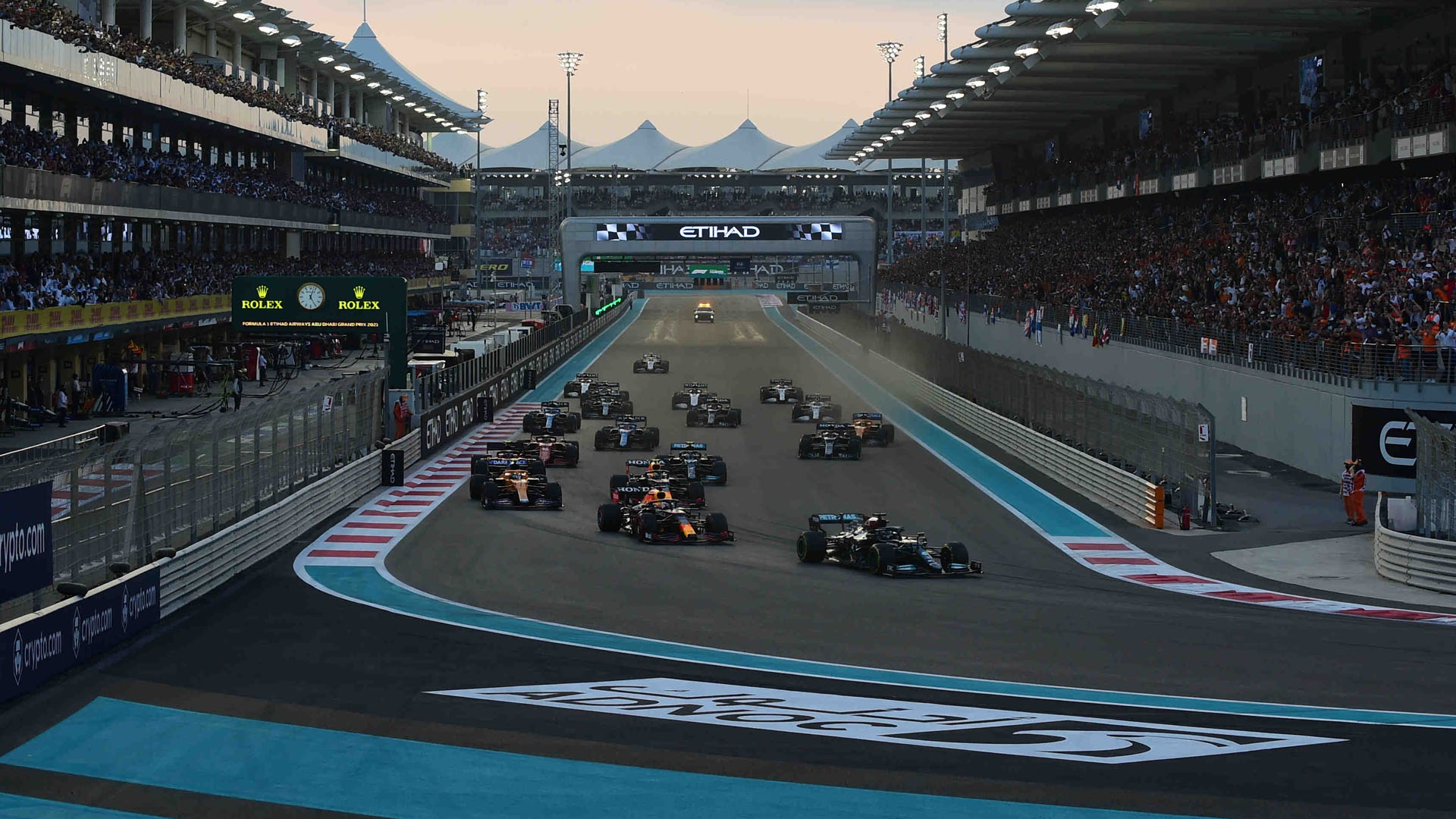
The finish to the Abu Dhabi Grand Prix last weekend: a thrilling well deserved finale or a travesty and an injustice – it depends on your point of view.
The implementation of ‘Plan B’ in the UK: either a sensible precaution or the end of freedom and a blow for the hospitality industry – it depends on your point of view.
The UK government decision to ban the sale of cars with internal combustion engines from 2030: either a useful step to net zero and combating climate change, or a short-sighted idea with no infrastructure to enable people to drive electric – it depends on…well, you get the idea.
My own view on these 3 examples of headline generation material are all over the place:
- In Abu Dhabi I felt Hamilton was robbed by a subjective decision to creatively bend the rules to change what is otherwise a procession of expensive cars. (Dutch readers – Verstappen a worthy champion nevertheless)
- Plan B (at least there is a Plan B!) Sensible precautions given Omicron
- We will not buy electric cars unless the government compels us to (ICE are much cheaper – we can have the environmental debate some other time…but I see the case)
These situations are not to the only examples of the ‘rules of the game’ changing and in doing so, changing the outcome. A race, even a world championship, is one thing: people’s lives are at risk with the others.
We can argue and campaign for change, or to prevent change, but with 2022 charging towards us our awareness of the changing environment – and the way the playing field tilts to our advantage or disadvantage – will be required in 2022 too.
The development of another virus variant in the pandemic has been predicted, although you do not know how these things will mutate and what to do about it. We – governments, scientists, and individuals – seem to be reacting to Omicron much faster than we did to the initial virus nearly 2 years ago. But we are only reacting.
At a time when many businesses are finalising their plans for another year – what events will you be planning for? Just looking for possible events may not be enough. They may not be that predictable anyway.
Planning ahead will be more effective if you look at the bigger picture and the things that will tilt the playing field/change the rules/move the goal posts.
A classic tool for this is a PESTLE* analysis: some of you will have used it in recent months. Some examples I have seen fall short in the most important area: they need to also ask the crucial question – so what?
It is not the events or rules changes which will determine the outcome of our plans for next year (or beyond).
It is our response to these events.
Some of these changes can be seen in advance: the UK government’s plans for compelling us to buy electric cars has a 10-year notice period. The automotive industry is readying to adapt to this, some companies more quickly than others.
There’s an interesting video** on the future of the auto industry (including a great line about how Americans think 100 years is along time, while Europeans think 100 lies is a long distance…)
There will be winners and losers, and none of the existing incumbents wants to the next “Kodak.”
Whether we like it or not we are probably in a similar position, whether we work in automotive, steel, professional services, supply chain – and of course training providers.
Enjoy your planning for 2022. It will not go as planned. But having a plan will help you decide what to do when the rules change, or when someway, somehow, the playing field tilts.
Because it will.
Today’s headlines – are they merely events or are they a change to the field you play your game on?
*A PESTLE analysis is a tool used to gain a macro picture of an industry environment. PESTLE stands for Political, Economic, Social, Technological, Legal and Environmental factors. It allows a company to form an impression of the factors that might impact a new business or industry.
** Useful views about how car makers around the world are moving to an EV future. Who do you think will win? https://www.youtube.com/watch?v=IiFVNUYnr3g
Buzzword of the Week – Hurdle Rate
Definition – The minimum rate of return required to make an investment or a project financially attractive. This is used as the rate to discount future cash flows when calculating New Present Value (NPV) and Internal Rate of Return (IRR) and can be adjusted – usually increased – to account for increased project risk.
Alternate View – In the quest for positive NPV, choice of hurdle rate is critical. Most companies add a risk premium to their weighted average cost of capital (WACC), which is the overall required return, and set that as the hurdle rate. All sounds very logical, but the academic discussion about what is cost of capital – or WACC – means this remains a subjective decision, despite all the spreadsheets.
Coming Up…
For BIPC Worcestershire I am running another free webinar on Monday 10th January on Personal Productivity. This is designed for people starting up new businesses, and it’s a n hour of tips and techniques to help you get more done, or the same done in less time.https://www.eventbrite.co.uk/e/personal-productivity-for-people-starting-their-businesses-registration-214493314277?aff=ebdsoporgprofile
CIPD HR Hot Topics is on Friday January 14th an informal free flowing discussion about what’s hot in HR right now. Free to join – https://www.eventbrite.co.uk/e/online-cipd-cov-warks-hr-hot-topics-networking-meeting-tickets-224223988987?aff=ebdsoporgprofile
Phil Ingle Associates – I make understanding business easier. To improve you need to become better at what you do: I enable you to become better at running your business. I specialize in training and coaching you in 3 areas which are crucial for any business: finance, negotiation, & communication. Can I help you? Check my schedule here https://calendly.com/philingle/30min-1 and find a slot which suits you