
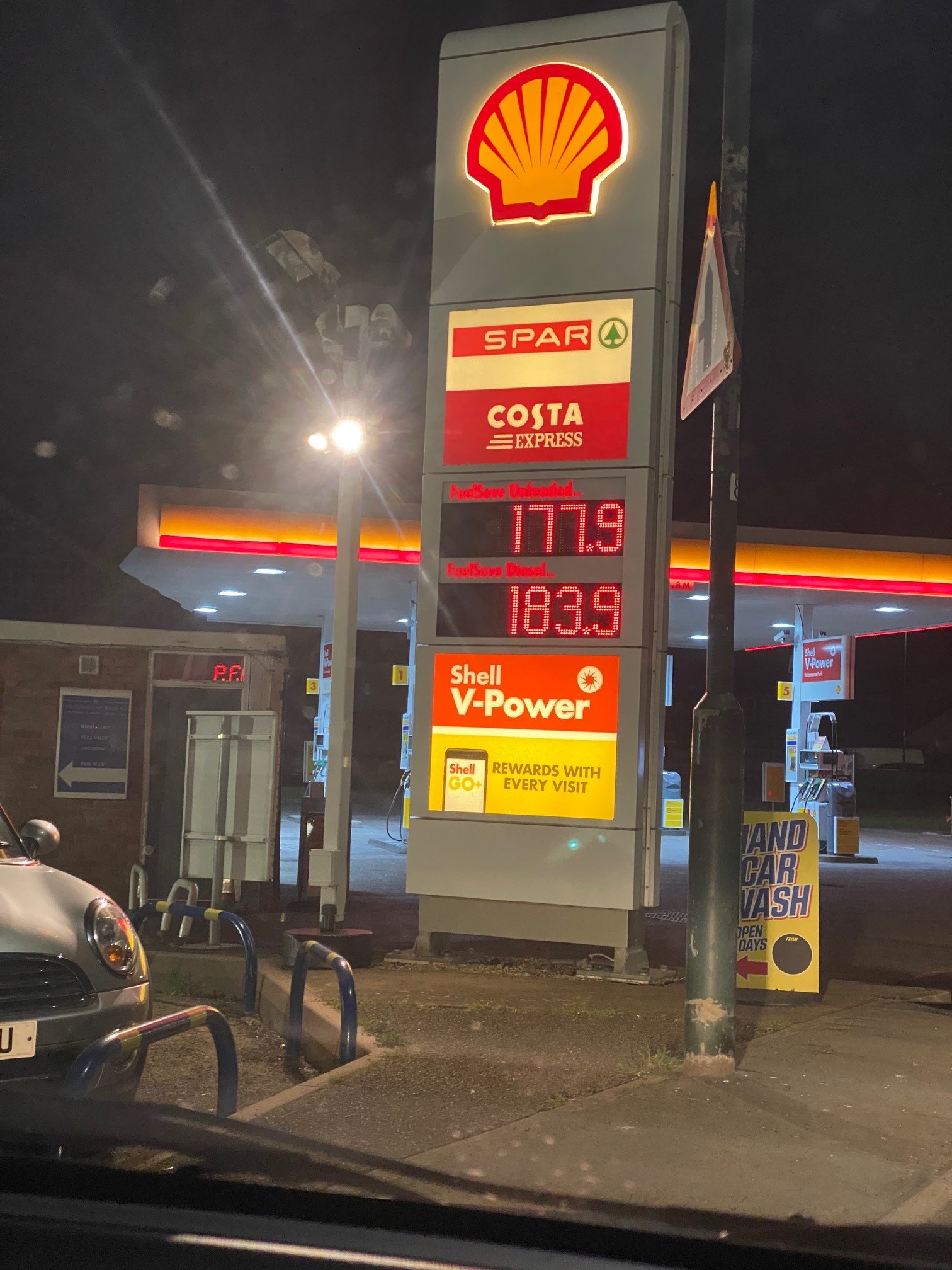
No question about the biggest economic story of 2022 – inflation.
We should perhaps not be surprised we have it: all that money printing – sorry quantitative easing – during the pandemic means that there has never been as much money in the world as there is today, and supply chain issues mean more money is chasing fewer goods.
We have been here before. I can just about recall the inflation of the 1970s, initially caused by the ‘oil shock’ of raised prices following conflict in the Middle East.
Yet I wonder if in the UK there is another factor too.
I can just about recall as a young boy being in (and indeed serving – not yet a teenager!) my uncle’s newsagent and tobacconist shop in Bedford. This included the period in early 1971 when the UK went ’decimal’ – instead of its currency being pounds subdivided into 20 shillings each of which had 12 pennies, the pounds were divided into 100 pence – just like US Dollars and Cents.
A not infrequent customer comment in those times was about the ‘confidence trick’ imposed on the people by the government . (I should not be surprised at such language – we sold lots of tabloid newspapers.) They referred to the effect of decimalisation on prices.
For example, a gallon (4.4 litres) of petrol cost some 6/8 (6 shillings and 8 pence) in 1970, and in 1971 went to 33p – the decimal equivalent. Yet 33p seemed cheaper than ‘6 & 8’ as it used to be called. The increase in 1973 as it went through 68p per gallon therefore seemed easy to take.
There was though an issue: people were still earning in pounds, and the worth of the ‘pound on your pocket’ (to quote a piece of 1960s political speech from PM Harold Wilson) went down. The UK experienced extensive labour disruption in the form of wage claims and strikes, and with it lost productivity and poor quality.
For a while we were even limited to how long the electricity was on: literally dark days.
Today psychology around inflation remains, though in different forms. We are on the cusp of a widespread £2 per litre for petrol, or £8.80 per gallon, compared to the 33p per gallon of the early 70s.
Other prices are being actively managed around psychological price points: you can see this happening with groceries and entertainment.
If we leap forward another 50 years, I am confident a litre of petrol will be well over £10, meaning among other things huge changes to fuel retailing: all those pumps only going up to £9.99.99!
If I do a quick extrapolation from petrol at 33p/gallon (7 or 8p/litre!) to £1.85 or so today, it should be comfortably above £50.litre by 2072.
Despite the whole electric car/renewable energy move I fear we will still be using fossil fuel: next year the Flying Scotsman, a steam locomotive burning coal, turns 100. There will still be classic car market.
Yet despite the huge prices rises, other measures highlight we are still better off today than in the 1970s: on average we spend less of our income on energy and food. WE take more holidays and spend more on leisure. The short term – say the next year – is clear, there will be lost of rising prices.
Which means we have to focus as businesspeople on being more productive and improving what we do so we can continue to earn what need to pay.
Better review our products, services and prices now.
Buzzword of the Week – Free Cash Flow
Definition – the cash generated after accounting for cash outflows to support operations and maintain its capital assets. Unlike operating profit or net income, free cash flow measures profitability excluding non-cash expenses of the income statement but includes spending on equipment and assets as well as changes in working capital from the balance sheet. FCF to the firm is before Interest Payments, FCF to Equity after Interest.
Alternate View – Great idea, and better than EBITDA according to some, including Warren Buffett. But plagued by multiple definitions: different organisation will tweak their definition either to reflect the nuances of their business, or just because it suits them. You have to check who is defining it and ensure they are consistent before using it as a benchmark. And it is definitely not ‘free’. Personally, I stick to Net Earnings less Capital Expenditure net of Depreciation.
Coming Up…
Writing a Business Plan Pt 1 Tuesday July 12th 10.00am – this free one hour workshop is brought to you in association with BIPC Worcestershire, but you can get tickets https://www.eventbrite.co.uk/e/writing-a-business-plan-pt1-registration-335069892067?aff=ebdsoporgprofile
Goodwood Festival of Speed – Friday & Saturday June 24th/25th – I shall be there again this year, let me know if you are going too!