
Not true of course, just a twist on a famous Mark Twain quotation*. But the question of what you are buying when you do buy shares remains relevant, especially in a week which has seen the largest stock market price falls in a long time. Maybe the financial effects of Covid-19 will come to be seen as the start of something big?
The nature of what buying shares means is highlighted this week with the publication of Warren Buffett’s Annual letter to the Shareholders of Berkshire Hathaway. Buffett is one of the world’s richest men, and arguably the world’s greatest investor. Berkshire Hathaway started out in textile manufacture: it is now a sprawling conglomerate of transport, insurance, energy and investments, and Buffett proudly announces it’s 2,744,062% gain since 1964.
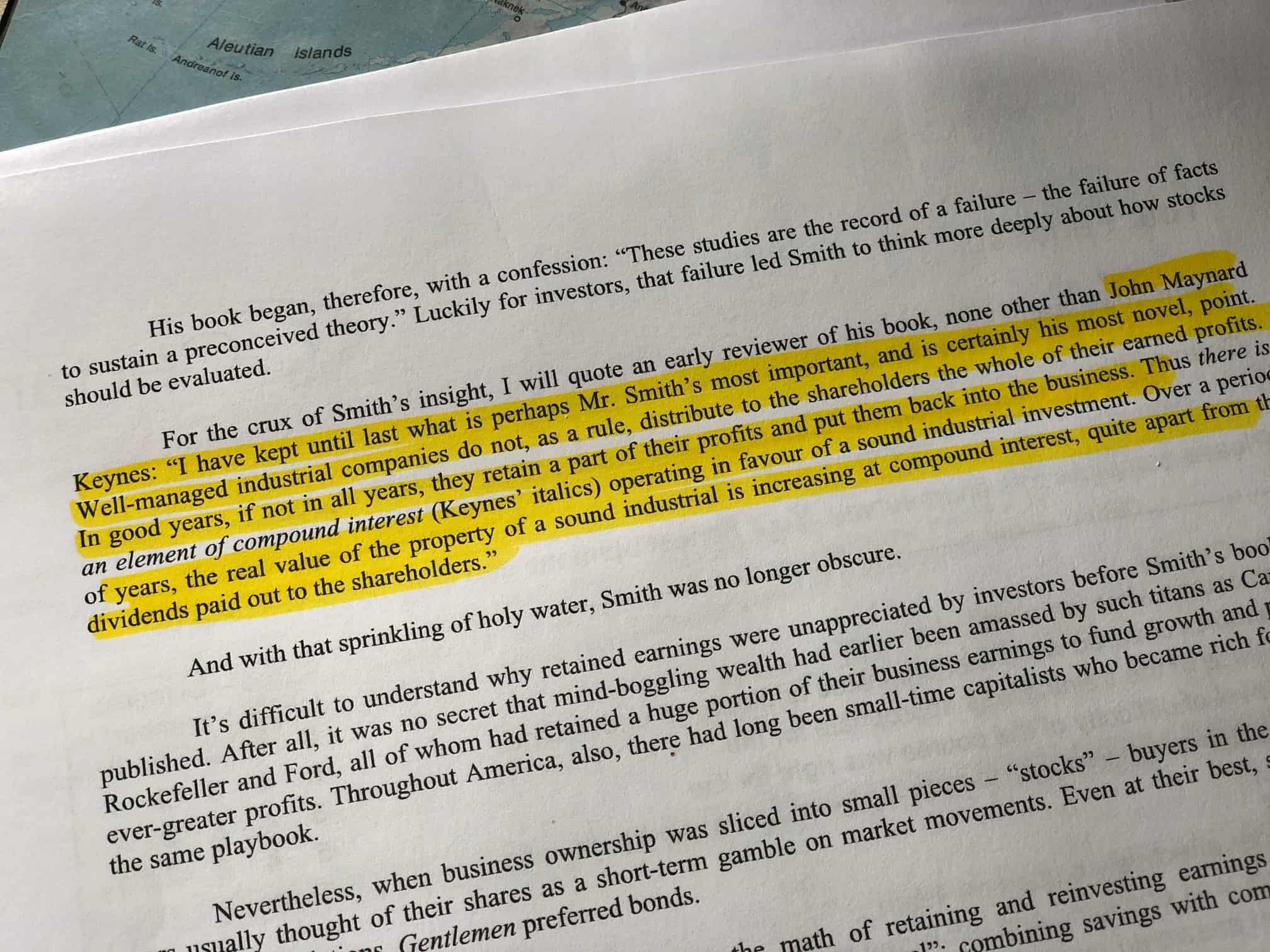
In this year’s letter he focuses on the role of Retained Earnings – what “us Brits” call Retained Profits – and how their importance was realised by the publication of Edgar Lawrence Smith’s book Common Stocks as Long term Investments in 1924. More specifically he reminds us of John Maynard Keynes review which pointed out “there is an element of compound interest operating in favour of a sound industrial investment”. Retained Profits are not just a source of capital but provide the compounding effect when retained in business.
When we move on some 96 years since the publication of Smith’s book, the essence remains true. One variable though is that there are fewer companies coming to public markets. There are multiple reasons for this, but my own feeling is that one driver is that companies no longer need huge amounts of capital to buy tangible assets (factories, machinery) to grow. Instead we have a very large increase in intangible assets (software, intellectual property) and also goodwill – an accounting entry now parading as a fixed asset.
So, if you and/or your pension fund trustees are buying shares, what are you really buying? This remains the same now as 1924. It’s not assets, it’s not company ownership, it’s certainly not “brand”. Its future cash flow. As an investor, you need to ensure your shareholdings will still make that, and remember that Retained Earnings can help that process.
*”Buy land, they’re not making it anymore” Mark Twain. Or maybe Will Rogers in 1850. Who knows?
https://www.berkshirehathaway.com/letters/2019ltr.pdf
Buzzwords of the Week –Retained Earnings (UK: Retained Profits)
Definition – Retained earnings (RE) is the amount of net income left over for the business after it has paid out dividends to its shareholders. A business generates earnings that can be positive (profits) or negative (losses). Positive profits give a lot of room to the business owner(s) or the company management to utilize the surplus money earned. Often this profit is paid out to shareholders, but it can also be re-invested back into the company for growth purposes. The money not paid to shareholders counts as retained earnings.
Alternate View – remember that Dividends are optional – there is a long list of companies which did not or do not pay dividends. Currently Amazon, and (as you can imagine from the note above) Berkshire Hathaway. Remember too how Earnings/Profits are Retained: in assets (machinery, factories, intellectual property) or in reduced liabilities. Both of these should help future profitability – and future cash flow.