
This is normal.
We are used to change being the only constant, so I hope you are noticing some of the changes over the last 2 weeks or so. From my relatively comfortable position in the UK, I am seeing some new perspectives on our world.
For the last 13 months our lives have been dominated by the Covid 19 pandemic, with some incredibly dark days in human terms, and challenges for every business. Having got over the unprecedented use of the word unprecedented last year, the phrase that I still find uneasy to hear is ‘back to normal’.
I think we mean post pandemic rather than January 2020, or just a desire for things to be better.
Having had both Covid (I got off lightly) and a vaccination I know I am fortunate, as are the majority in the UK. The effect of vaccination is now being seen in the numbers – and their reporting. Yesterday 4 deaths in the UK following a positive Covid test were reported. 13 months ago, that would have been a major headline: now it barely caused a ripple.
Yet 4 people have still died.
Some other signs of change:
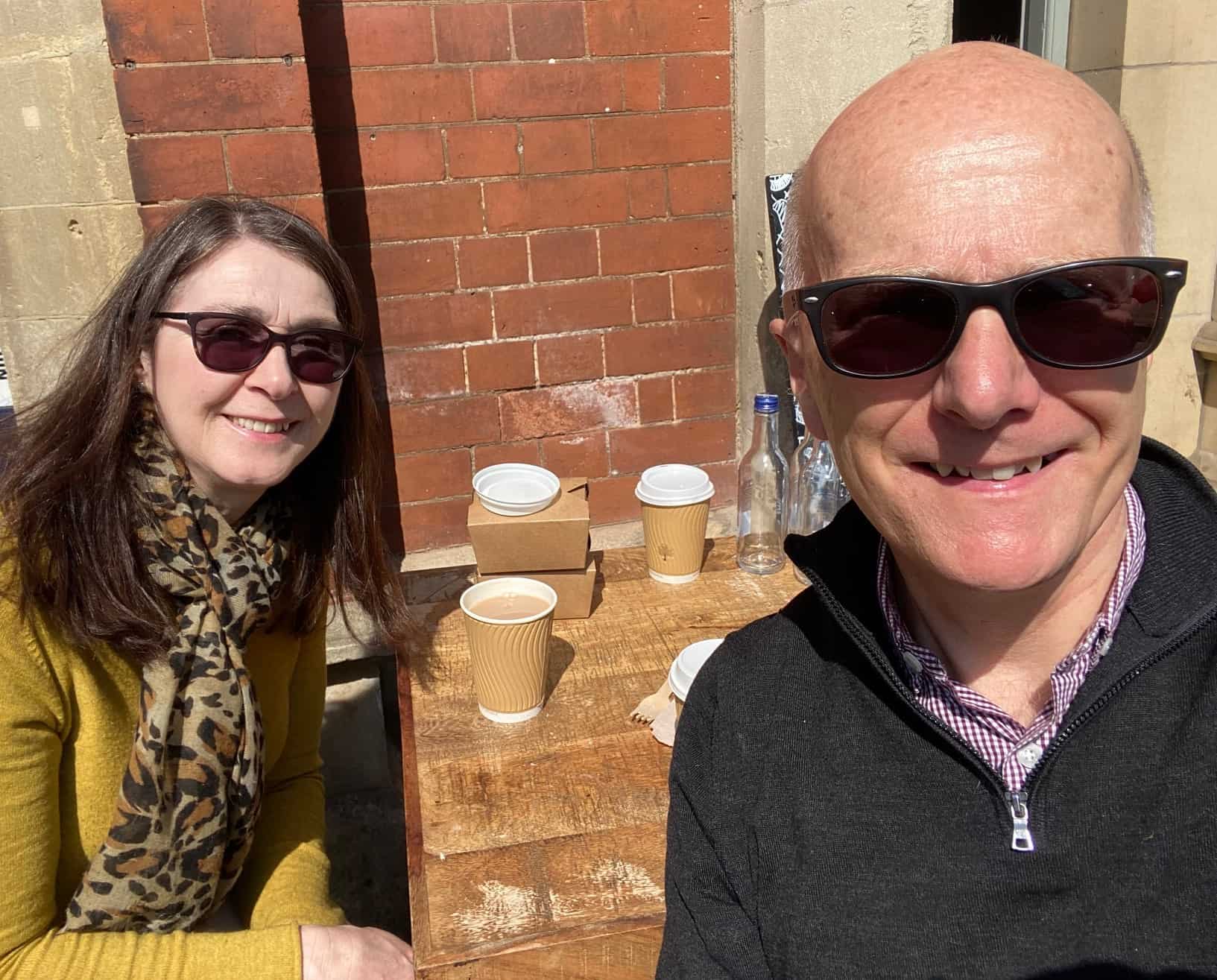
• My wife Joanna and I enjoyed our first coffee outside a coffee shop last Saturday, with the UK’s ‘roadmap’ having allowed the outside reopening of hospitality premises. It was lovely!
• The traffic: we had to wait in a queue of other cars, the first time for months. There is visibly more traffic on the roads.
• The news: the last few days headlines have been dominated by the plans for a European Football ‘Super League’. I noticed one newspaper this morning giving this greater prominence than the outcome of the George Floyd murder trial. Almost no mention of the people that died from Covid.
• The weather – some sunshine always improves the mood, even if you have to pick a south facing coffee shop pavement to sip your cappuccino on.
• The UK Government Minister for Sport & Media, Oliver Dowden, this morning made a comment on TV about government action as ‘we are in the middle of a pandemic’. What I reflected on was not just his words, but my reaction to them: “Are we really ‘in the middle’”? It does not feel like it.
• Economic indicators for much of Europe, the UK and the USA are positive.
• UK European & US Government support for the economy continues. One story in this week’s The Spectator magazine features a US citizen living in London with $1400 of Biden’s support to spend. In Restaurants in South London, apparently.
• There have been queues outside shops: but this time not caused by limitations on numbers inside and rigorous social distancing. In the case of Primark in Birmingham, it is people determined to buy new clothes.
• Next week I will be delivering a training session week in person, not via Zoom or Teams. We will be socially distanced, but in the same room. First time ‘live’ since December!
I hope you – wherever in the world – also have your list of good things you have noticed. My list is not exclusive.
Yet we still have problems and issues in the world that need attending to:
• A CIPD session today on Diversity & Inclusion showed me that we have a long way to go in treating each other equally. My own takeaway from this session is the need to pay attention to people who may not be included (especially in work settings) when there are no visible signs: for example, those who are partially sighted or hard of hearing. It is not as though I am perfect even with visible signs.
• Our world: the Netflix documentary Seaspiracy I found thought provoking. The programme’s use of statistics has been questioned, and it was not presented as an academic exercise. But what goes on at sea is largely out of sight, so out of mind. Some of it – and no one can accurately quantify how much – is illegal. Eating fish does not seem so vital now.
• Our world: the weather. Yes, some sunshine in the UK, but unusually not much rain. The local farmers are not happy. It is worse for some in Europe – French & Italian viticulture has lost a huge amount of production this year because of late frosts. Climate change will be an issue for a long time yet.
• The next pandemic. Covid 19 is still evolving. We have to remind ourselves this comes after SARS Cov 1, Ebola, SARS, Swine Flu, Asian Flu…there is a list. The next pandemic is a case of when, not if. Hopefully, we have learned a lot from this one.
• Off the back of rising stock markets, especially the UK and US, comes the question of when the next crash will come. It is (again) when, not if – that is what stock markets do. Sorry I cannot tell you with any degree of confidence when this will happen. But then no one else knows either.
Sorry to highlight the negatives, but I like to provide some balance.
I know in some countries this week the pandemic seems to still be virulent. Vaccination brings hope but will take time. It looks like we will get used to ‘living with Covid’ in the same way we live with influenza.
One commentator I follow suggested that ‘no normal’ is the ‘new normal’ (I read lots: apologies for forgetting who wrote that.)
For many of us I believe this means that what we are doing this week and next is normal. Not perfect, not always great. Different in some ways from the start of 2020.
For those of us in good – even reasonable – health, now is the time to do what you can, when you can, remembering a main lesson from the last year that your physical and mental health is the most important thing. It is the time to get on with doing your best, achieving your goals.
And drop the phrase ‘when things get back to normal’.
Buzzwords of the Week – Asset Turnover
Definition – Calculated by dividing sales by average total assets, this is a measure of how hard the firm’s assets are being put to use. A high ratio may indicate running close to capacity. This ratio could also be calculated as sales divided by fixed assets or net working capital.
Alternate View – Easy to calculate, and a year-on-year measure the trend should move up. But remember the significant increase of intangible assets – especially goodwill – in recent years. Many businesses are not so dependent on tangible fixed assets as they once were (Offices post-pandemic?). Far less important than other ratios like Return on Capital or Profit Margins.