
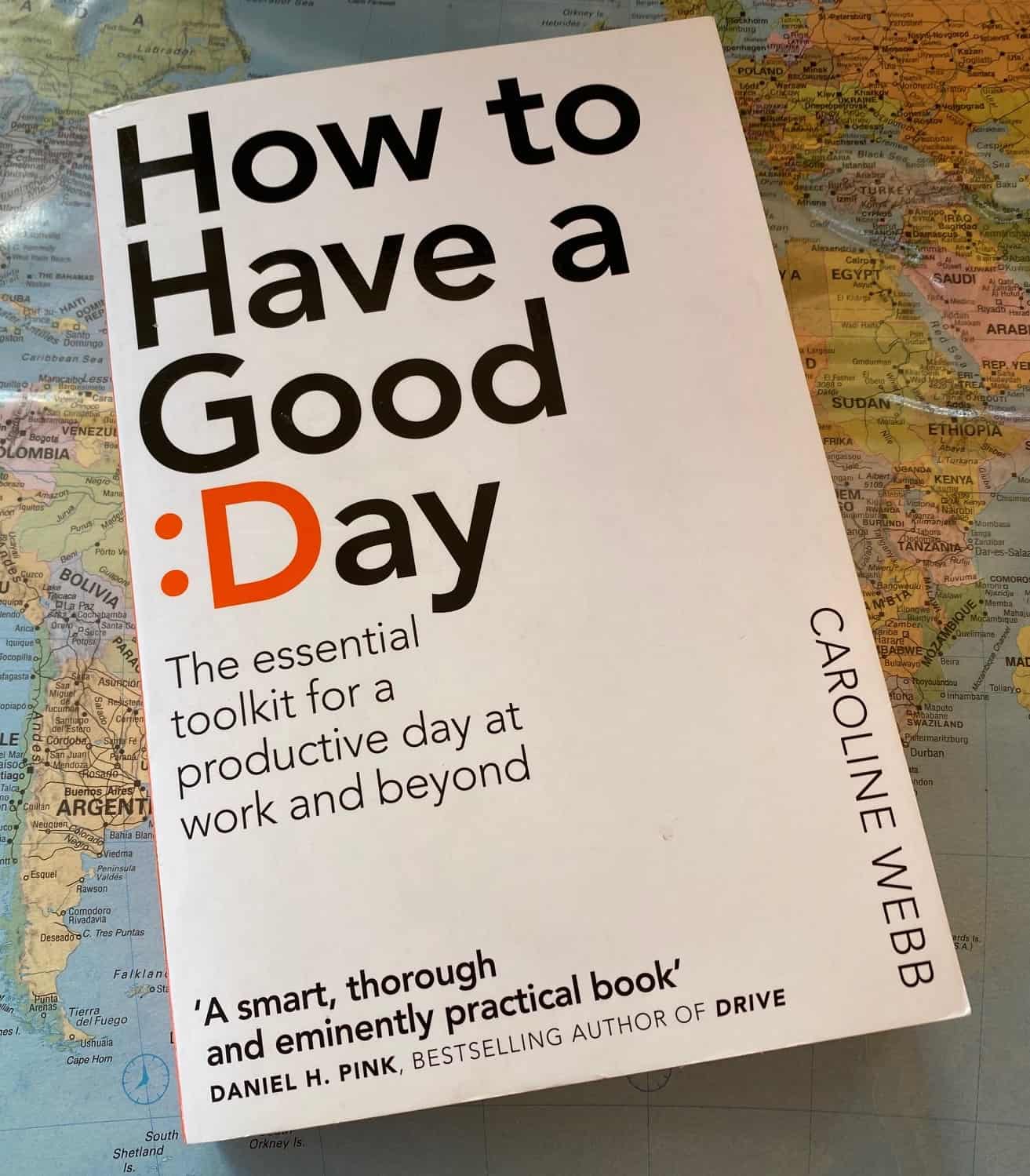
Productivity what it is, how to improve yours.
Had a lovely morning on Tuesday running a Personal Productivity training session wit a group of start up entrepreneurs.
Have a look at this video here with my favourite tip.
A couple of extra tips which were highlighted when I was working with this group:
1) The session did contain the words Time Management. This term is a lie, usually told to you by people in Learning & Development like me. At least I acknowledge it is a lie. You cannot make 61 minutes in an hour or 25 hours in a day. You cannot manage time. BUT you CAN manage what you do in that time.
2) One delegate highlighted he liked to get up early and get some work done before his 3 children – all aged under 3 – woke up. Well done to him for that. To do this he needs to get to bed early too – by 10pm at the most. But his productivity does not stop when his children get up. When they do, he is still productive – as a father, if not as a management consultant. Your productivity is not confined to your work.
I also came across this article which contains a useful run through of some of the history, and the current state of play, in Time Management. Sorry, I mean Personal productivity….
https://www.newyorker.com/tech/annals-of-technology/the-rise-and-fall-of-getting-things-done
Buzzwords of the Week – Return on Capital Employed
Definition – ROCE is a metric for analyzing profitability, and potentially comparing profitability levels across companies in terms of capital.
Capital employed is found by subtracting total assets from current liabilities, which ultimately gives you shareholders’ equity plus long-term debts. Instead of using capital employed at an arbitrary point in time, some analysts and investors may choose to calculate ROCE based on the average capital employed, which takes the average of opening and closing capital employed for the time period under analysis.
ROCE= Operating Profit or EBIT divided by Capital Employed where: EBIT=Earnings before interest and tax Capital Employed=Equity plus Long Term Debt
Alternate View – IMHO the best measure of profitability. Make that profit ability. Margins are OK, but this shows what a company makes from what it has. The inclusion of Long Term Debt as capital more realistically reflects current millennium financing and interest rates.
The debate about Return on Invested Capital could be shortened if everyone agreed with me and used the current market value of the Equity plus Long Term Debt as the definition of invested capital.
Consistent ROCE or ROIC above the cost of capital tells a good story of long term performance.
Online Learning – my first online programme – How to Read Financial Statements – is now available. This is a series of 7 online lessons:
1. How finance fits with Strategy
2. The Language of finance
3. Owning & Owing – using the Balance Sheet
4. Measuring & Managing Profit
5. Measuring & Managing Liquidity
6. Budgets, what, why & how
7. The most important part of all
Each lasts between 20 & 40 minutes and includes the slides and videos to help you understand what good looks like in financial terms. There is a special offer price this week of just $49, and is available now at https://app.mastermind.com/masterminds/8443