
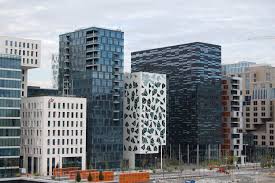
“If you can go into a restaurant in New York City you can come into the office. And we want you in the office” James Gorman, CEO Morgan Stanley
Which sounds clear enough, but will not work this week in the UK: official guidance continues to be work from home until July 19th.
Will we, should we, go back to the office once permitted? From my discussions over the last week, many including fellow members of the CIPD, here are some of the drivers and constraints on a return to office life, or maybe even life in an office:
- Not everyone works in an office. Huge numbers in manufacturing, hospitality, retail and wholesale do not have the choice to WFH.
- Current reported labour shortages in the UK are mainly in ‘non office ‘sectors, especially hospitality and logistics.
- The UK’s furlough scheme comes to an end in September. Anecdotal evidence I hear suggests those presently on furlough are reluctant to go anywhere ahead of the ending on the scheme, and especially try work at new employer – a return to furlough may make them ineligible. Government support tilts the playing field.
- The success of WFH depends on the H. I am very fortunate in having dedicated workspace (my Strategic Headquarters for Education and Development). Not everyone has such space, especially the Generation Z demographic
- Elevators: the view from the 20th floor may be nice, but getting there, even when vaccinated and towards the (hopeful) end of a pandemic?
- Commuting to work. Public transport with masks – not pleasant. Increased UK traffic flows are reportedly due to decline in use of public transport, which is a decline in desire to use it. UK rail is currently running at around 20% of capacity.
- Social interaction: we don’t just work in the office – we make friends there, not just online. The relationships may be different too – and I acknowledge my bias. I met my wife in the office.
- Flexible working doesn’t just mean where you work, but when and how.
- Productivity. A report in last week’s Economist magazine highlights how productivity over the last year may have declined while people WFH. They work for longer, but get less done, mainly due to too many unproductive and unrequired meetings.
- Office downsizing: a local company is moving from 12,000sq.ft to under 6000.
- WFH can encourage the ‘always on’ culture. The article above mentions how many who WFH work longer.
- How does absenteeism work now? If everyone was in one place for work and a different one for home, we knew when you were absent. How about presenteeism then?
- MS Teams – a saviour for many. New features are being added, all designed to help us all become broadcasters. If you on TV, do you need an office (or a studio?)
- The increase in WFH regrettably correlates to an increase in incidences of domestic violence. Not sure we can prove causation but enforced WFH creates a different type of stresses than those involved in commuting, skyscrapers/offices with no natural ventilation.
- If ‘unprecedented’ was word of the year in 2020, ‘hybrid’ must be a contender for 2021, across both contexts of working and vehicle propulsion.
- At the CIPD Festival or Work this week, we were reminded by Professor Alex Edmans that the average performance of the 100 best US companies to work for outperformed their peers by between 2.3-3.8% per year. Cumulatively that works out between 89-184% over 40 years. So getting the back to office message and action appropriate for you has an impact. Incidentally, Morgan Stanley has an award for being in the top 100 firms for HR, which is not quite the same thing.
My thoughts on this:
- There are no rules, rights and wrongs. Asking what works best for us (us = everyone in the organisation, not just the ‘top team’) is a good place to start. The “Where do you feel most productive?” question may be useful.
- The commercial property sector is under pressure, so landlords will be keen to supply some office space at attractive rents. As with government policy, this may alter the playing field.
- We are in the middle of a working revolution, something akin to an industrial revolution. Things will continue to change. The rest of 2021 will see just as much change as the same period in 2020: but as its change, it will be different to last year. What feels most productive right now and what will feel most productive by June 2022 could be very different.
Buzzwords of the Week – Working Capital
Definition – Current (Short term: turned into cash within 12 months) Assets less current (Short term: must be paid within 12 months) liabilities. These include the capital which is consumed in normal business operations.
Alternate View – Best viewed as a ratio (see below). Hugely important if you are handling physical stock, which needs to be turned over quickly: ideally received in the morning and sold in the afternoon. For service or non stock businesses, the management of working capital comes down to ensuring your customers pay you when they say, and ensuring you have enough in the bank – or borrowing facilities – to pay your bills when they fall due.
Coming Up…
Reset Restart is a funded programme of webinars and coaching to help new and small businesses recover. This is available in selected locations across the country, I am working with Rob Harrison from Glued with eligible businesses in Worcestershire. Over the next week I am coaching a range of businesses and also running a webinar on finance. Details at https://www.eventbrite.co.uk/e/finance-making-keeping-your-business-profitable-3-of-4-tickets-143695580349?aff=ebdssbonlinesearch
You may also be interested in joining the discussion on Gravitias: how to get your voice heard, featuring Antionette Dale Henderson. I have seen Antionette speak on this topic before, this is a valuable enhancement that goes beyond mere presentation skills. Tuesday 22nd June 5.30pm https://www.eventbrite.co.uk/e/gravitas-how-to-command-respect-get-your-voice-heard-tickets-154795667007?aff=ebdsoporgprofile
Online Learning – my online finance programme – How to Read Financial Statements. This is a series of 7 online lessons:
- How finance fits with Strategy
- The Language of finance
- Owning & Owing – using the Balance Sheet
- Measuring & Managing Profit
- Measuring & Managing Liquidity
- Budgets, what, why & how
- The most important part of all
Each last between 20 & 40 minutes and includes the slides and videos to help you understand what good looks like in financial terms.
For more details and to sign up now: https://mailchi.mp/5a4bb30d1cb2/how-to-read-financial-statements