
This week saw me have a LinkedIn work anniversary, and the congratulations duly flooded in: thank you if that included you.
In all honesty the date is a little inaccurate, as I ‘enjoyed’ a period of ‘garden leave’ before finally leaving banking, so I had been going a little while. But it’s a good reminder of what it felt like to go it alone, and start on the road of running my own business.
What also reminded me of those days was my work this week with Reset Restart, a programme from the British Library for new start-ups and small businesses impacted by the pandemic. I was privileged to work on this series of webinars and coaching with Rob Harrison from Glued, who invited me to help him out. We have been helping start-ups, well, start up.
When training and coaching like this you always learn something else yourself: there will probably be some learning points here for you too, whether you are employee, entrepreneur or just starting out:
- Running your own business means you have 2 jobs. The second of these is what you think is your job: tutor, nature adviser, travel consultant, environmentally friendly play resources – what you normally say when someone asks what you do. But job number 1 is the most important: you have to find customers.
- There is also Job Number 3 – you now find you are your own in-house IT consultant. You may be lucky enough to delegate/outsource this if you have teenage children nearby.
- There are no rules. You are the boss, so you decide. Your decisions include whether you stick to rules or not. Where these concern the health and safety of you, your team and your customers I suggest you do. Even where there are rules, you decide whether they apply to you or not.
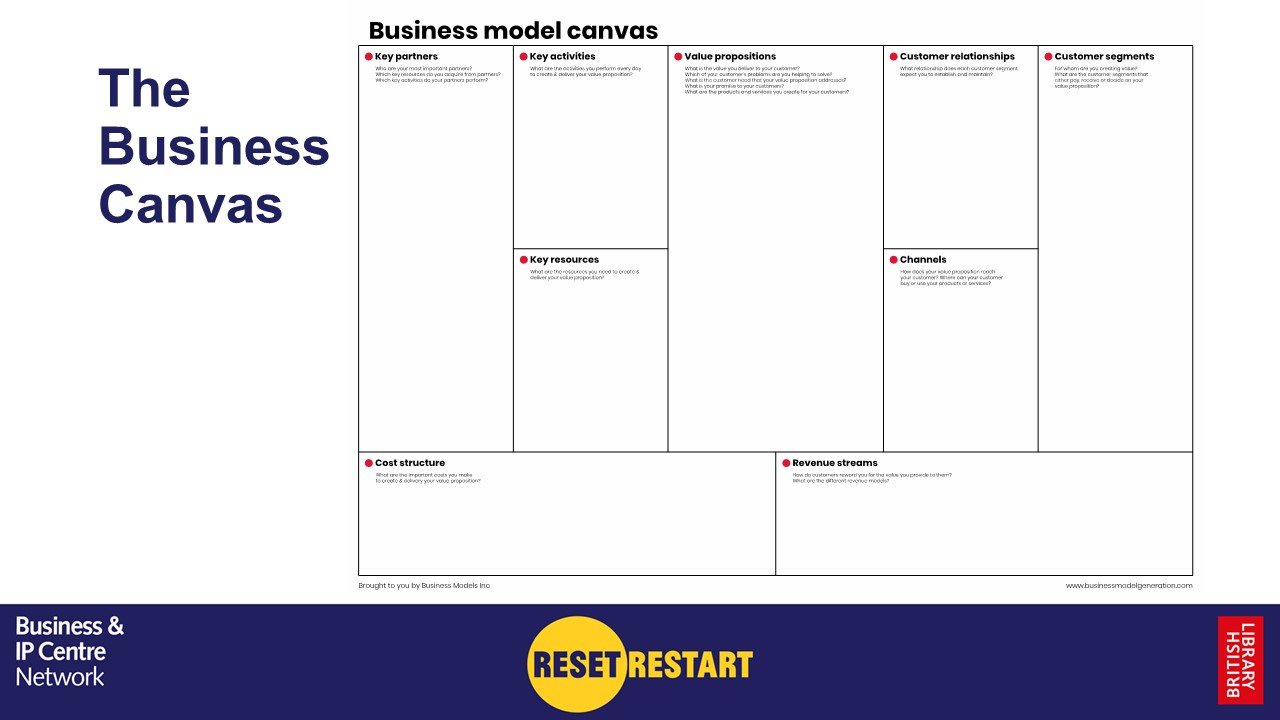
- There are tools to assist you – lots of them. One we used, which I now recommend, is the Business Model Canvas. This enables you to think about how your business will ‘work’. You can use it as it is, or tailor it to your situation.
- As with all tools, it is not the tool but the way it is used – and whether it is used – that determine the outcome. This means your skills are more important than the tools, but the tools can help.
- Another tool I use when training is KASH: Knowledge, Attitude, Skills, Habits. Worthy of a book on its own. When starting a new venture though, watch the Habits. There will be some new things to do, maybe not taking long but need doing regularly, which will help you grow. Marketing can be a habit.
- Working ‘On’ vs. Working ‘In’: as an employee you are usually working in. Working on involves taking a bigger picture view, not just solving today’s problem. This may need new habits, as mentioned.
- Your Plan is for your benefit: having evidence (written on paper or a screen) is a small token of your commitment to making a success of what you are doing. I use the Balanced Business Scorecard as my planning tool: I know lots of other businesses do too. It is not perfect; it is a tool to help you.
- The UK is a great, easy, straightforward place to start a business. Yes, there will be queues to join and forms to fill, but it is way easier here than in some other countries.
- It will not be easy. I did not meet any new start-ups who, at some point, did not have to work long hours or be more flexible in their approach.
A favourite statistic from around 2015 (so robust I have lost the exact source, but I recall it coming from a UK Government Department – for Business or Work) indicated 40% of job changers aged 40 or over were going self-employed. That will have changed over the last 18 months, especially driven by the UK Government furlough scheme and assistance (or lack of) for the self-employed.
But it does show that for many people, a ‘side hustle’, hobby or outside work pastime may one day become a viable career choice. It could be you.
Buzzwords of the Week – Working Capital Ratio
Definition – Divide the current assets by the current liabilities. Expressed as a ratio – say 2:1 – gives you a ready idea of how easy it is for an organisation to pay its bills. Also known as the Current ratio, and its close relative the Quick Ratio.
Alternate View – How much is too much? A higher ratio means its liabilities should be easily covered. But if that high ratio is the result of lots of stock (with the problems of warehousing and security) or accounts receivable (your money in someone else’s bank) then it may mask other issues. The quest for ‘efficiency’ (a Working capital ratio of around 1:1) has been reduced in the early 2020s by a realisation that holding cash may not be a bad thing.
Coming Up…
Online Learning – my online finance programme – How to Read Financial Statements. This is a series of 7 online lessons:
- How finance fits with Strategy
- The Language of finance
- Owning & Owing – using the Balance Sheet
- Measuring & Managing Profit
- Measuring & Managing Liquidity
- Budgets, what, why & how
- The most important part of all
Each last between 20 & 40 minutes and includes the slides and videos to help you understand what good looks like in financial terms.
For more details and to sign up now: https://mailchi.mp/92ada0829df3/htrfs-v2