
What we learned this week
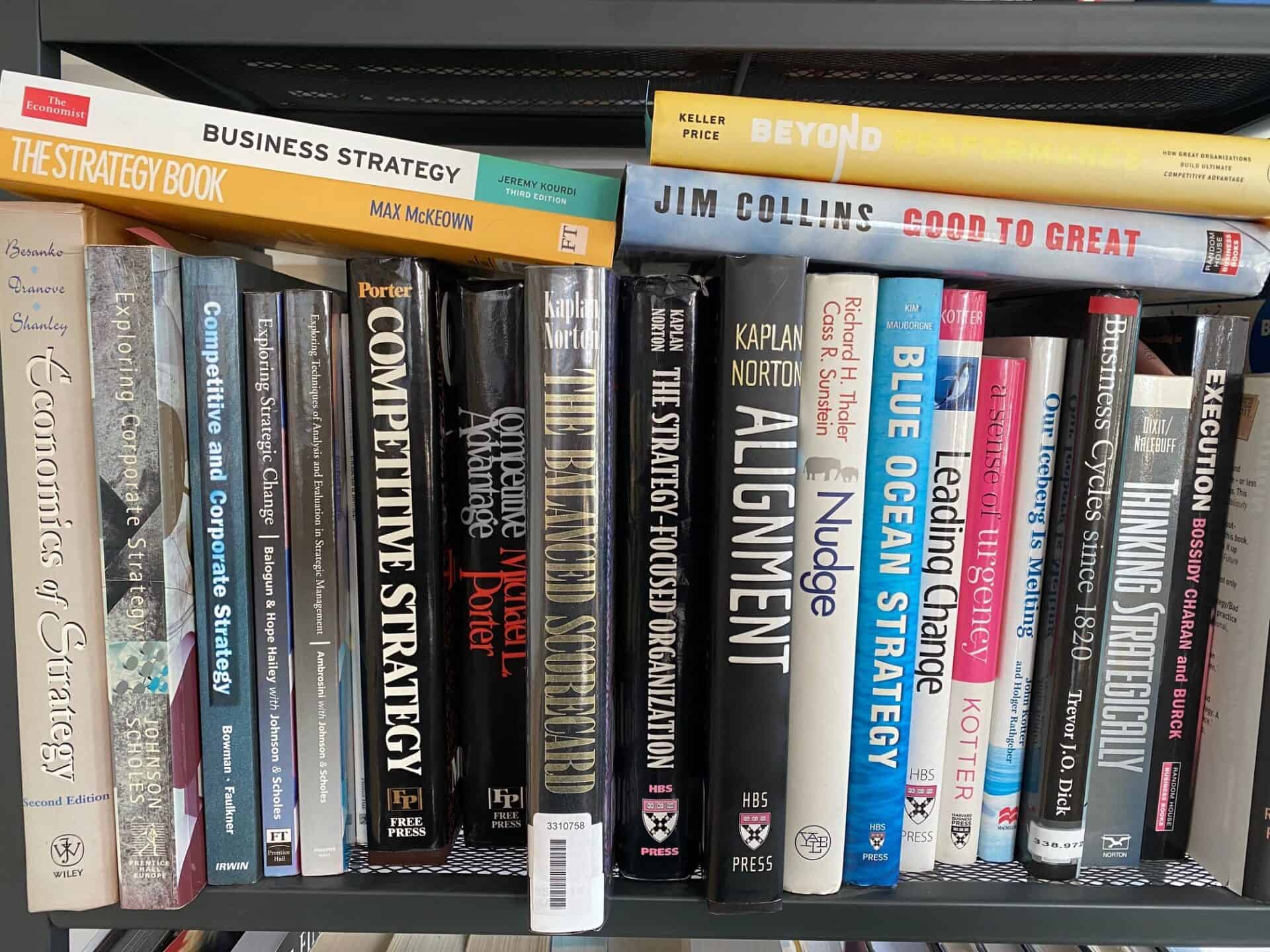
The UK now has a ‘roadmap’ for exiting the Covid-19 restrictions we have been living with for the last year. The fact that this word is used by government may mean it is regarded with caution, maybe even scepticism.
But the business world has been using a similar word for decades.
Strategy. Probably one of the biggest sources of management speak and jargon in business.
Despite the huge amounts of literature on the topic (My Amazon search bought up over 60,000 books on the topic) there remains no single definition, and certainly no rights or wrongs in terms of what good strategy looks like. Not least because you do not really know until you have either been successful, or not.
Whether you have a strategy, plan, game plan, blueprint or even a UK Government roadmap, as long as you know where you are going and know what you will do to get there, it probably doesn’t matter.
In among the huge number of quotes about strategy, one gives a clue about one ingredient.
“The essence of strategy is choosing what not to do” – this from respected academic in this area, Michael Porter.
Further thoughts come from a letter in this week’s Financial Times from a retired UK Army Major General, Jonathan Shaw.
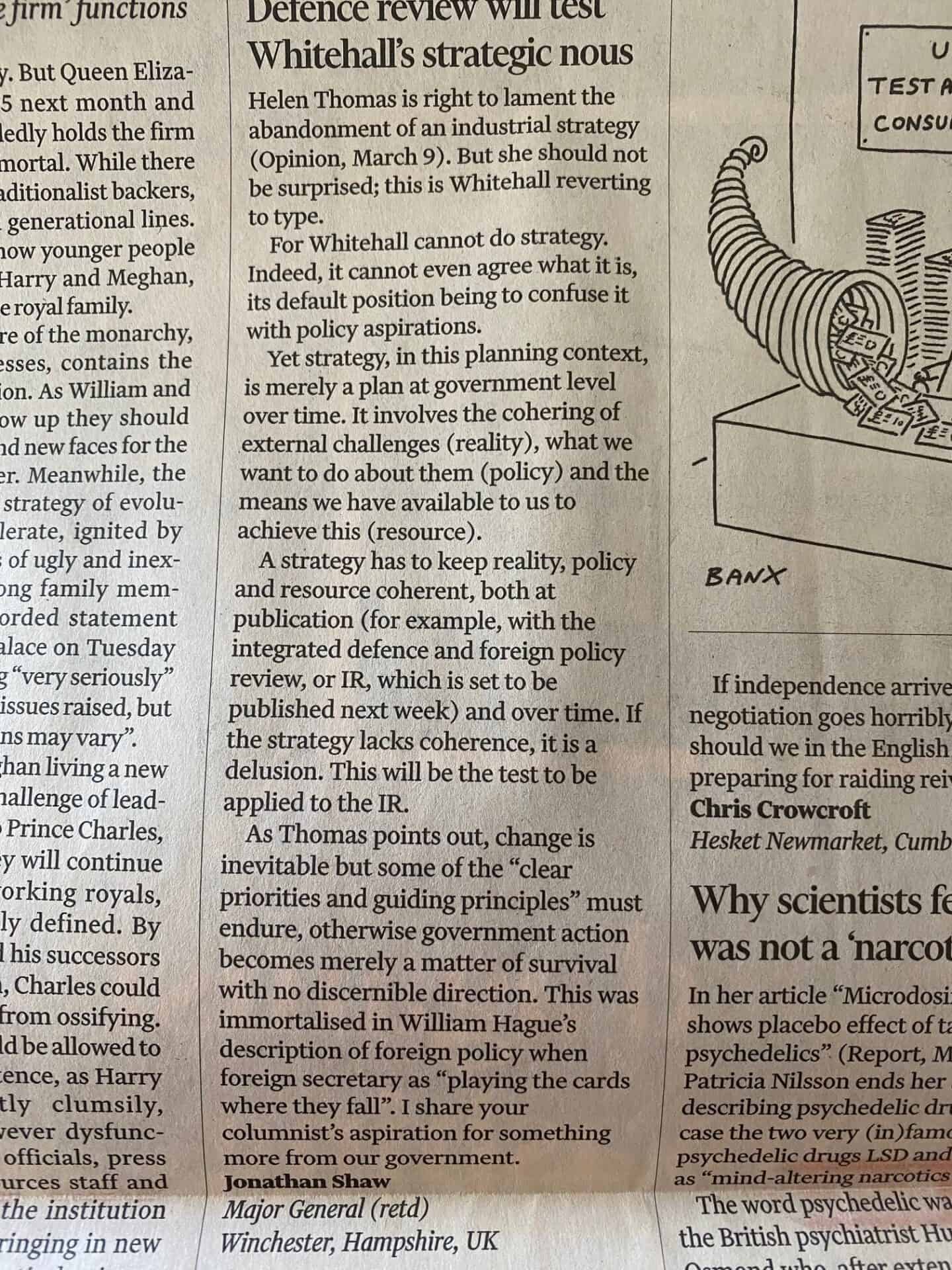
He links external challenges (reality), what we want to do about them (policy) and the means available (resource). He is referring to (UK) government in his context but is an interesting take.
With your strategy, you can be certain of two things:
1) The reality will not exactly match the plan/strategy/roadmap.
2) You will get somewhere whatever happens, but it may not be where you wanted to be.
It is this second point that provides the rationale for your strategy. Consequently, being clear about where you want to be, and what you want to happen, are the priorities, before deciding on action.
Our world will eventually handle Covid 19 to an extent sufficient to be able to meet each other socially, maybe even shake hands again in business. Some things be be different though.
The UK’s ‘Roadmap’ does provide a sense of direction, and despite the ‘data not dates’ narrative, focusses on the timescale as much as the action.
Where are you going, and how will you get there? It may be time for your own ‘roadmap’.
https://www.mckinsey.com/industries/healthcare-systems-and-services/our-insights/when-will-the-covid-19-pandemic-end?cid=other-eml-alt-mip-mck&hdpid=df11bcae-a7ed-4933-b1da-5b316cd4add1&hctky=12394198&hlkid=9c154f1e34bb4addb5c6a4c234933e31
Buzzwords of the Week – Return on Equity (RoE)
Definition – Calculated by dividing net income (Profit After Interest & Tax) by shareholders’ equity. So it a measure of net profitability. Equity is equal to a company’s assets minus its debt, so ROE is also the return on net assets. ROE is considered a measure of the profitability of a corporation in relation to stockholders’ equity.
Alternate View – Bordering on the irrelevant. Easily manipulated with various tax concessions, plus accounting treatments of what goes into Equity, at least with larger businesses. The clincher though is the amount of debt finance in business, which makes RoCE (above) a more realistic measure of ‘profit ability’.
Connect with me.
Not yet heard of Clubhouse? It’s a new audio only iPhone only networking and discussion app. It is either the Next Big Thing, or a total black hole of time and digital space. I am aiming to contribute to the former.
Online Learning – my online finance programme – How to Read Financial Statements. This is a series of 7 online lessons:
1. How finance fits with Strategy
2. The Language of finance
3. Owning & Owing – using the Balance Sheet
4. Measuring & Managing Profit
5. Measuring & Managing Liquidity
6. Budgets, what, why & how
7. The most important part of all
Each last between 20 & 40 minutes and includes the slides and videos to help you understand what good looks like in financial terms.
This is now hosted on Vimeo – email me if you would like to learn more.