

It’s a busy week where I live in rural Warwickshire – it’s the harvest. That presented us with a delightful evening of watching people hard at work – and keeping out of their way.
The resources being used were highly impressive:
- 3 combine harvesters at over £150,000 each
- 2 Tractors & Trailers, about £90,000 for the tractor, say £20,000 for the trailer.
- People to drive them: I lost count of how many they were working shifts. And working after dark too. Paid much less than the cost of a tractor. Probably more than the cost of a trailer per year.
The reason for the visible hard work? Like every harvest, there is a window of opportunity to gather the crops, preferably while there have the right moisture content, and definitely not when it is raining – not always easy on an island off the coast of Europe.
What have they generated financially? Neither I nor the farmer will know yet. Even if the farmer has sold the crop ‘forward’ (on a contract for future delivery) until every hectare is harvested and trailer unloaded, we won’t know how much the crop has realised.
But on the back of my envelope, every full trailer was carrying some 15 tonnes of oats, and the price is around £138/tonne. Say around £2000 per trailer load. They were tipping the crop into a local storage silo before it is transported to its customer.
Oats – a delicious & nutritious breakfast. I get my oats most mornings.
But I don’t pay £138/tonne. At £2.99 for around 550g of oats in Oatibix, that works out more like £5429/tonne.
Put it another way – what I pay £2.99 for in store costs about 7.6p in raw materials.
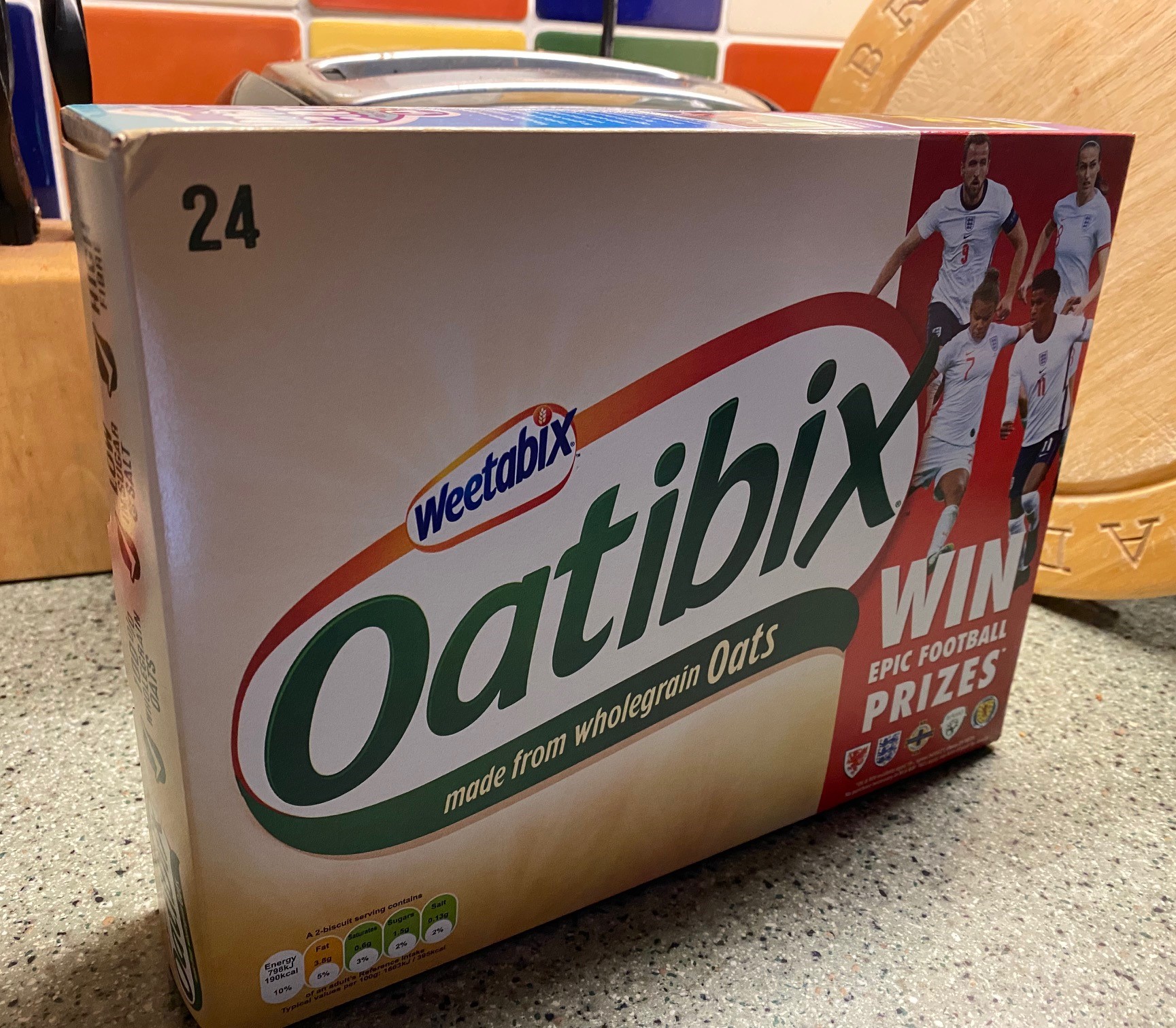
Let’s look at that journey, which starts with the visible costs of harvesting – the combines, tractors, trailers, and people, plus the bits I did not immediately see – the storage. Then there’s transport from farm storage to warehouse or factory storage facility.
Then the oats have to be made into Oatibix (yes, I know you can make porridge with just oats – cheaper than Oatibix) There is a substantial production line for this, which involves baking and cooling, plus packaging, and skilled people running the line. Someone also has to design the box to make it look good and protect the product too.
From factory it is transported to supermarkets, who have to rent stores and shelves, and pay people to move the product around and into my hands – whether in store or via home delivery.
Someone less morally upstanding than I could have popped into the field last night and helped themselves to a few oats – maybe even a few kilogrammes (there was plenty that got spilled!). Could have saved lots of money.
But we don’t do that.
Because we like added value. What are we buying in the supermarket? Not just food, breakfast, or nutrition. We buy convenience and cleanliness. That is what creates value for us. And do not ignore the costs of creating certainty around quality and availability – that’s called brand, created by marketing. All that packaging, advertising, and placing on the end of the aisles – we pay for that!
Two thoughts for your business:
- Are you reaping what you sow this week?
- How much value are you adding?
Customers don’t just want your raw material.
Buzzword of the Week – Payback
Definition – Used in investment appraisal, it is the length of time an investment takes to cover its cost. For example, an investment of $10,000 which generates $5000 per year has a payback of 2 years. In theory…
Alternate View – Short payback good: long payback – not so much. The shortcoming of simple payback though is it ignores the time value of money, the fact that $1 today is worth more than $1 tomorrow, as tomorrow’s $ may not turn up (risk). When you account for this, using Discounted Cash Flow analysis, and the crucial discount rate, you will find your $5000/year could be rather less, meaning a longer payback. OK concept, but lousy when used alone. Better with DCF.
Coming Up…
An Exciting Opportunity to Accelerate Your New Business Growth

The Challenge for Start Ups
- This year has seen a considerable number of people starting their own businesses having seen how working for someone else does not work for them.
- In the past, many of these start-ups would begin with a product or service, start selling on an online platform like eBay, and find a way to get by.
- These start up new businesses would find themselves at the whim of bigger businesses and competitors with more marketing muscle. But spending their time working ‘in’ the business would mean they did not look at the big picture and consider their desired outcomes, and direction. A huge number fail within 12 months.
- This does not have to be the case.
- Using everyday technology matched with the human skills to create services people want and products you can help people buy, provides a more realistic chance of success in the 2020s.
Getting Better: Your Only Option
- Going self-employed remains a risk: so does staying employed.
- Ultimately the success of any start up business depends on the knowledge, skills, attitudes, and habits of the people involved: the opportunities, challenges and tools are available to all.
- Many ‘free’ support services are available, yet they may lack the experience of seasoned business people familiar with the challenges:
- The cost of starting up without the direction and skills you need may be considerable: many will give up.
- It does not have to be like that…
InGlued Start Up Academy
- You can Fastrack your start up success by developing and applying the skills successful business people use.
- The Academy is custom designed based on our experience as business people and our experience in training and coaching start-ups to survive and grow.
- This training, coaching support and development is now available from Rob and Phil working in partnership with you.
- Inglued is a collaborative programme from Phil Ingle and Glued’s Rob Harrison
August 28th, 2021, 11:00 UK – Explanatory Webinar
- Register in advance for this meeting:
- https://www.eventbrite.co.uk/e/introduction-to-the-inglued-start-up-academy-registration-165724762225
- After registering, you will receive a confirmation email containing information about joining the meeting.
Want to talk to Phil Now
- We understand that you may want to talk to us, maybe to ask a question or just confirm that we’re alive and kicking. We’re remarkably busy but have made our schedule available for you to automatically book a 15-minute Zoom Call.
- Click here to fix this up now.
- Our Eventbrite page is here where you can sign up but make sure you get the generous discount code before you do.